Moment Factory
Context
Practicum
Moment Factory
Methods
Stakeholder Interviews
Contextual Inquiry
Content Inventory Audit
Qualitative Synthesis
Role
Ux Researcher
Timeline
January – April 2026
Project Overview
AI Readiness Starts Before the AI: A Knowledge Management Study
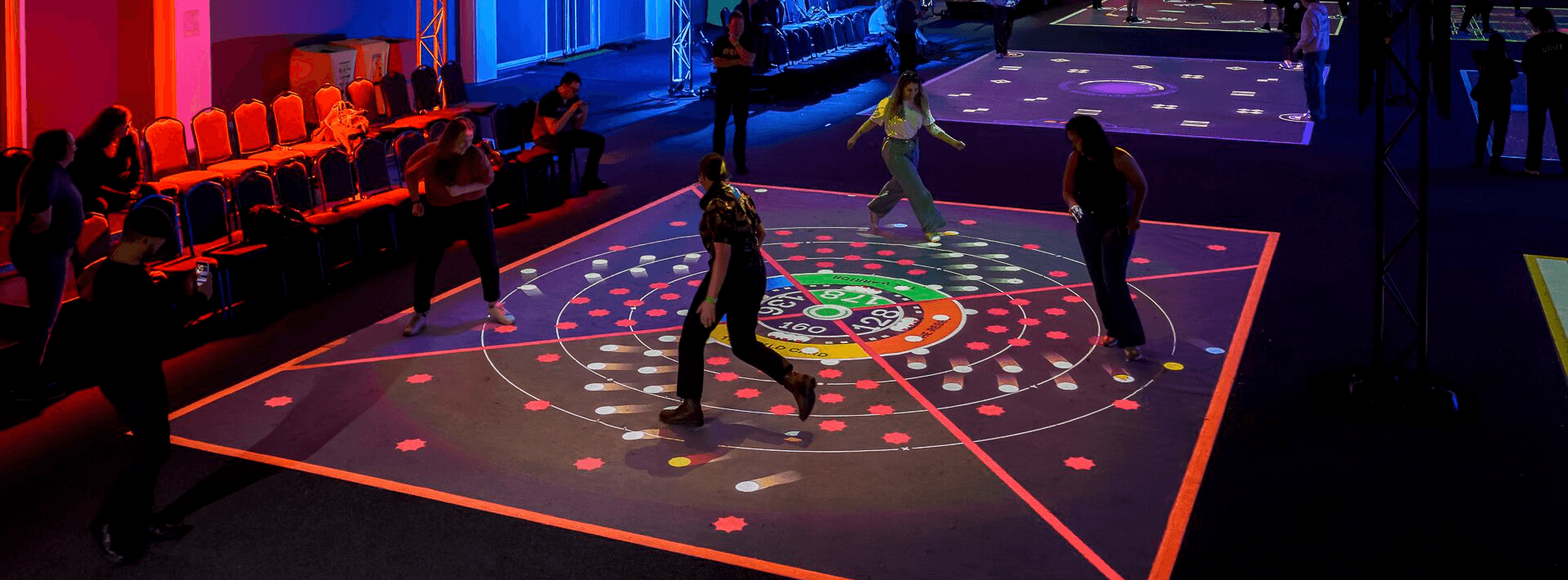
Moment Factory is a global studio known for large-scale multimedia and immersive experiences delivered for clients across various countries.
Moment Factory wanted to implement RAG and AI systems into their information and knowledge base. But before any AI system could retrieve knowledge reliably, the organization needed to answer a more basic question: What counts as knowledge, and how should it be captured and documented in the first place?
I proposed a framework and taxonomy to answer that question, grounded in UX research and stakeholder interviews. That work became a knowledge management framework the organization can build future AI systems on.
problem Space
A RAG system can only retrieve what's findable and structured. Moment Factory's knowledge was none of those things yet.
Knowledge lived across Slack, Notion, Google Drive, and Confluence — and, most often, in people's heads. One Slack thread said it plainly: someone asked "Where is the source of truth?" about basic naming conventions. Twelve replies, no clear answer.

The Server

People's Head


Archive
One Slack thread said it plainly: someone asked "Where is the source of truth?" about basic naming conventions. Twelve replies, no clear answer.

For a human, that's friction.
For a RAG system, it's a failure mode—scattered, untagged knowledge gets retrieved with false confidence instead of surfacing the gap.
Content was also organized by who owned it, not by what people needed to do. That mismatch meant even a well-built AI tool would retrieve the wrong things, or nothing at all.
Reframed problem
Moment Factory didn't have an AI tool problem. It lacked a defined knowledge foundation, and no RAG system could be trusted to retrieve from it until that foundation existed.
Research
Treating knowledge as a product, then researching who uses it, and how it breaks.
I framed the problem the way I'd frame any UX research question:
What tasks do people need to complete?
What knowledge is critical to doing their job?
Where does that knowledge actually live versus where people expect to find it?

Method: 6 stakeholder interviews across roles, paired with contextual inquiry and a full content inventory audit of Moment Factory's Google Drive, not just what existed, but how people actually searched for it, what they gave up on, and what they asked a colleague instead of the system.
Synthesis surfaced 7 organization-wide patterns.
Insight: Knowledge exists, but isn't findable or trusted
Insight: Knowledge lives in people, not systems
Insight: Structure follows ownership; people search by task
OPERATING MODEL
A framework only works if someone owns it — but not everyone.
I also recommended a hybrid operating model: a small core team setting taxonomy and governance, with department champions driving adoption. Rigid centralization wouldn't fit an organization running two-week events and four-year installations under one roof.
FINDINGS & RECOMMENDATIONS
Knowledge was organized by who owned it. People searched by what they needed to do.
I identified the core taxonomy problem: content was structured by department, but people searched by task. That mismatch weakens both human search and AI retrieval — a retrieval system reading department folders sees weak signals, not content type.
I recommended a two-layer taxonomy—content type/intent, paired with department/project—so knowledge stays ownable but becomes retrievable by what it actually is.

Future Work
Expand the research with a broader quantitative survey to validate interview findings across a larger group of employees and reveal patterns at scale.
Test and refine the proposed structure with real users to ensure it reflects how teams actually search and reuse knowledge.
Pilot a small-scale KM solution in one team before broader implementation.
Define governance and ownership for maintaining knowledge quality, consistency, and long-term adoption.
Develop clear guidelines for what should be documented, how, by whom, and for what purpose.
Measure success over time through indicators such as findability, reuse, and employee satisfaction.
This experience showed me that knowledge management in the creative industry is far more complex than I had initially understood.
One of the biggest realizations was that there is no single KM solution that fits all teams. Projects vary greatly in scale, pace, and workflow, which makes flexibility essential.
I was also struck by the sheer volume of data in this environment. Seeing the physical archive infrastructure made the challenges of archiving and long-term preservation feel very real.
KM is not only about systems and documentation but also about people, culture, and trust.
It was especially meaningful to see that the people I interviewed genuinely seemed happy to work here and deeply appreciated the environment and culture. That says a lot about the organization itself.
Overall, this practicum helped me better understand both the strategic and human sides of KM, and it strengthened my interest in working at the intersection of knowledge, systems, and user experience.